Mostrando entradas con la etiqueta josé saramago. Mostrar todas las entradas

miércoles, 17 de noviembre de 2010

Junkera culminates his trilogy opening the Basque music to non-latin rhythms.

Published in the newspaper ABC
16-11-2010 / 14:10 h


Published in the newspaper ABC
16-11-2010 / 14:10 h


Bilbao, NOV 16 ( EFE).- The trikitilari (a basque word meaning the person who plays the diatonic accordion) Kepa Junkera has culminated his trilogy of folksongs in Euskera (the Basque Language) interpreted by musicians and singers outside of the Basque Country with the album, Herria (Town), in which the interpreters come from Non-Latin musical cultures.


This project started off in 2008 with Etxea (House), in which Junkera surrounded himself with musicians of the Caribbean and Iberian Peninsula and were sung in euskera; Miguel Bosé, Ana Belén, Loquillo, Jaime Urrutia, Santiago Auserón, María del Mar Bonet, Estrella Morente, Michel Camilo and Dulce Pontes are some of the voices that took part in that first record.

In Kalea (Street), the Latin Americans were the ones that interpreted and sang the Basque song: Juanes, Lito Vitale, Viticus, Pablo Milanés, Julieta Venegas ...

Now, this project closes with "HERRIA" in which "the collaborators” from countries like United States, Madagascar, Greece and Korea are musicians in the area of folk music.

“The sounds are a slight different with new instruments", Junkera has said in the presentation of his new album in Bilbao.

“HERRIA” includes 23 songs recorded in Paris, Istanbul and Casablanca and in the North American cities of New York, San Francisco, St. Antonio, Los Angeles, Oakland, Boise and Hawaii.

The album reflects the cities´ music’s of where it was recorded, so that the Basque songs appears with different versions as the rhythms of the Indian tribes, tex mex , with the musicians of Flaco Jiménez, jazz of New York by the hand of Dave Douglas’s quartet, gospel or the sound of the lyre, the ukulele or the wind instruments of Armenia and Turkey.

Junkera has explained that in the album "truly talented" musicians have worked with him although the names may not be all grandiloquent like the ones in the first two albums, especially because, "the Anglo-Saxon world is much more unknown to us".

The trikitixa's interpreter has highlighted that in the three albums the participating musicians have had the freedom to make of Basque folksongs "theirs" with "no limitations", although "the main thread is the strength of the Basque songs" and Euskera. Junkera has thanked the writers José Saramago, who passed away last June, Bernardo Atxaga and Xabier Aumuriza for the prefaces that they made for these records.

Junkera has recognized that the most difficult one was making the first of the three albums, mainly because until then he was accustomed to collaborate with other instrumentalists and not with singers, but he has said that, once "Etxea" was recorded, the whole project remained established the "philosophy and the work dynamics"

I am very proud of what I have achieved and all the people that has helped me out, the balance of the whole project is "very very positive", Kepa has said before thanking the writers José Saramago, who passed away last June, Bernardo Atxaga and Xabier Amuriza who wrote the prefaces for these records.

Kepa Junkera, that will now dedicate himself to the promotion of "HERRIA" till the end of the year to discuss new projects for 2011. He has pointed out that is would be "very pretty" to give a "grand finale" concert with the musicians and singers of the three albums, explaining that it is "very complicated" to organize it.
EFE maf/em.

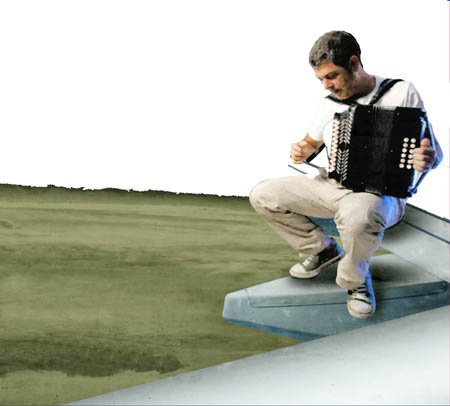
martes, 16 de noviembre de 2010

KEPA presents HERRIA his third, last, new album of the trilogy.


EITB KULTURA: Nov 16 2010


This time, the Basque accordionist has surrounded himself with musicians from U.S. A., Madagascar, Greece and Korea. In these new versions we will find folk, jazz, gospel and rhythms of the Indian tribes.


Today Kepa Junkera begin_of_the_skype_highlighting     end_of_the_skype_highlighting has presented his third and last new record HERRIA of his trilogy being first "Etxea" (2008) followed by "Kalea" (2009). The three records gather the traditional folksongs in euskera (Basque language), interpreted by musicians from outside of the Basque Country.

In Herria (Town), the Basque accordionist has surrounded himself with non Latin interpreters of musical cultures and having contact in the area of folk music. This new album includes 23 songs recorded in Paris, Istanbul, Casablanca and in the North American cities of New York, San Francisco, San Antonio, Los Angeles, Oakland, Boise and Hawaii.

The sounds are a slight different with new instruments", Junkera has said in the presentation of his new album in Bilbao. The record reflects the cities´ music’s of where it was been recorded, so that the Basque songs appears with versions as the rhythms of the Indian tribes, tex mex , with the musicians of Flaco Jiménez, jazz of New York by the hand of Dave Douglas´s quartet, gospel or the sound of the lyre, the ukulele or the wind instruments of Armenia and Turkey.

This project started off in 2008 with Etxea (House), in which Junkera surrounded himself with musicians of the Iberian Peninsula and the caribbean that they sang in euskera. Miguel Bosé, Ana Belén, Loquillo, Jaime Urrutia, Santiago Auserón, María del Mar Bonet, Estrella Morente, Michel Camilo and Dulce Pontes are some of the voices that took part in that first record.

In Kalea (Street), Latin American were the ones that interpreted and sang the Basque song: Juanes, Lito Vitale, Viticus, Pablo Milanés, Julieta Venegas ...

The trikitixa's interpreter has highlighted that in the three albums the participating musicians have had freedom to make of Basque folksongs "theirs" with "no limitations", although "the main thread is the strength of the Basque songs" and euskera. Junkera has thanked the writers José Saramago, who passed away last June, Bernardo Atxaga and Xabier Aumuriza for the prefaces that they made for these records.

Video-clip HERRIA Egun da Santi Mamiña

Video-clip : Trilogy ETXEA KALEA HERRIA


www.kepajunkera.com

viernes, 18 de junio de 2010

Preface of my album ETXEA written by JOSÉ SARAMAGO

Photo by Jose Luis Nocito, Bilbao 2001.


Today José Saramago has decided to say goodbye to all of us to continue his journey to the different corners of the soul, far and unknown, but certainly it will be a new challenge for this great Portuguese writer.

From kepajunkera.com we want to make a small tribute to him, publishing the preface he wrote for the album ETXEA two years ago.

--------------------------------------------------------------------------------------------


There is a musical city where all the cities of the world are represented, as if it were a mutual home. The name of the architect and the builder of all of this is Kepa.


The oldest music was the human voice. Somehow we could say the man discovered the music within himself, inside each sound of a word of our rude forefathers, even when it was going to be necessary thousands of years before the first one would be formed.

The music has always latent within the man, as a possibility, but multiple and murmuring, also lived nature. The birds already singing, the wind whistling in the cavities of the grottoes, the cascades; thunders like a song of Richard Wagner in advance and altogether, and what we can also imagine, was the nature’s great orchestra, where an empty seat awaits the arrival of man. Which finally appeared holding in his hands a bone with holes called flute. And also a round object with a hole, with a skin stretched over the opening, which would receive the name of drum.

Also bringing with him his own voice, and without no doubt, was one of the most sublime moments in history of mankind, in which a human being, man or woman, stood up to sing. From there on, it may not appear at first glance, but the songs collected by Kepa Junkera are about this, in this unique recording that surely will seek new directions in the composition and musical interpretations. To sing the language of others is the first challenge.


José Saramago (2008)


www.kepajunkera.com